Car Maintenance Schedule – How to Maintain Your Car Properly
A complete car maintenance guide: the basic and advanced tasks every owner should know, a mileage-based maintenance schedule, and a full inspection checklist to keep your vehicle safe and reliable.
Did you know that neglecting regular car maintenance can lead to repair bills totaling over $1,000 annually? Studies show that drivers who stick to a simple maintenance routine save up to 20% on car-related expenses in the long run. If your repair bills keep piling up, a few simple maintenance habits could save you hundreds — if not thousands — of dollars each year.
In this guide, we'll walk you through a complete car maintenance list designed to help you stay on top of essential tasks, so your car remains in peak condition all year round. Whether you're looking for a preventive maintenance checklist or wondering "what maintenance does my car need?", this article has you covered. Follow it and you'll keep your vehicle safe, reliable, and efficient on the road.
5–7.5k mi
Oil change interval
8,000–12,000 km, depending on oil type and driving conditions.
6–8k mi
Tire rotation
Rotate with every oil change to keep wear even.
Monthly
Fluid checks
Oil, coolant, brake, transmission and washer fluid levels.
1× / year
Full inspection
Every 6 months for older cars or harsh driving conditions.
Car Maintenance List
To keep your vehicle in top condition, you should have a basic idea of the full car maintenance list so you can follow it and stay on top of things. Maintenance splits into two sections: basic and advanced. The basic tasks can usually be done yourself (DIY), while the advanced ones are best left to your mechanic.
Basic Maintenance Tasks
These are core tasks performed on a regular basis. They're generally simple and can often be done without professional assistance.
Oil Change
An engine oil change is essential. The engine oil in your car is one of the most important and routine tasks on any car maintenance list. Fresh oil keeps the engine lubricated, reduces wear and tear, and ensures smooth operation.
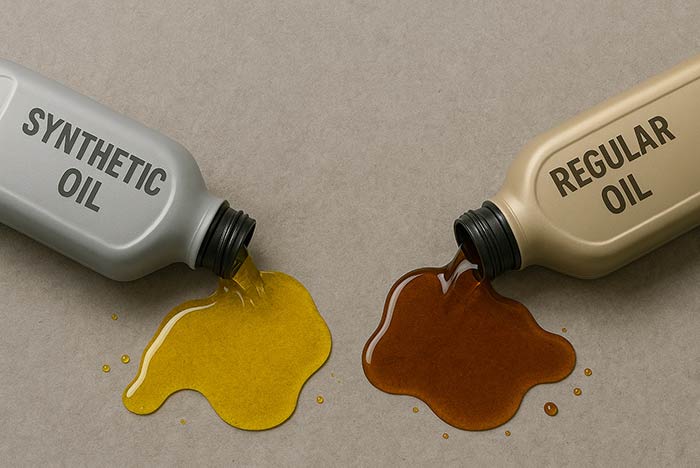
Frequency: every 5,000 to 7,500 miles (8,000 to 12,000 km), though this varies with the vehicle model and the type of oil used. Our guide on how often to change your oil breaks the intervals down by oil type and driving conditions, and if you're weighing oil types, see synthetic vs. regular oil.
Tire Rotation
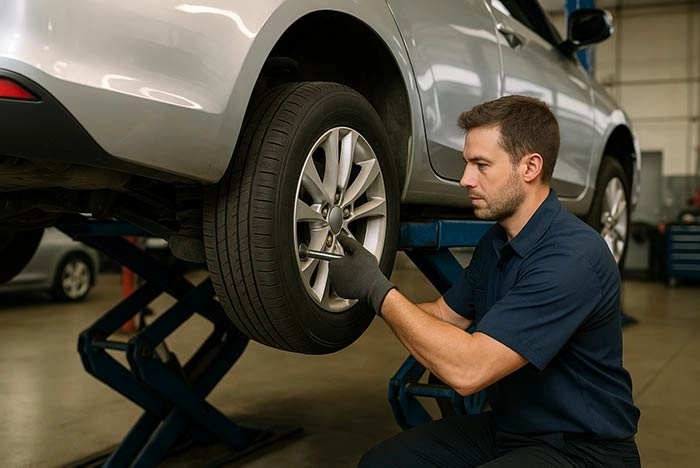
Tire rotation prevents uneven wear across all tires, extends tire lifespan, and improves handling. It involves moving the front tires to the back and the back to the front (often crossing sides) to distribute wear evenly.
Frequency: most tire manufacturers recommend every 6,000 to 8,000 miles (10,000 to 13,000 km). See the full tire rotation guide for patterns by drivetrain and DIY steps — and keep an eye on tire pressure between rotations.
Fluid Checks
Always keep an eye on the fluids in your vehicle — maintaining proper levels is vital for performance and safety. Fluids to check: engine oil, coolant, brake fluid, transmission fluid, power steering fluid, and windshield washer fluid.
Frequency: check fluids monthly. Many fluids, like brake and transmission fluid, typically need replacing every 30,000 to 60,000 miles.
Filters
There are around 8 filters in your vehicle — some you will probably never hear about and never need to replace. Here are the main ones that should be maintained regularly:
- Oil filter — replaced with every engine oil change.
- Air filter — usually quoted at 15,000–30,000 miles; rule of thumb, change it at oil service intervals. It is inexpensive to maintain.
- Fuel filter — again, change it at oil service intervals.
Pro tip
Bundle your basic maintenance: do the oil change, oil filter, air filter check and tire rotation in one session (or one shop visit). It saves time, and the fixed rhythm makes the schedule easy to remember.
These basic tasks are relatively inexpensive but crucial to the health of the vehicle. By sticking to this part of the car maintenance list, you can prevent small issues from turning into major repairs.
Advanced Maintenance Tasks
Advanced maintenance tasks go beyond routine upkeep and typically involve more complex components. They are performed less frequently but usually require professional inspection or repair.
Timing Belt/Chain Replacement
Timing components are some of the most important parts of the engine — they keep the valves and pistons in perfect sync. If they snap, the engine is ruined.
Frequency: replace approximately every 60,000 to 100,000 miles (100,000 to 160,000 km), depending on the car model. Always consult the owner's manual for specific recommendations.
Don't gamble on the timing belt
A snapped timing belt on an interference engine bends valves and can destroy the engine — a repair that often costs more than an older car is worth. If you buy a used car near the replacement interval with no proof the belt was changed, budget for the job immediately.
Brake Inspection and Replacement
The brake system should be inspected regularly to ensure it's functioning properly. This includes checking brake pads, rotors, and fluid levels. Worn brake pads compromise stopping power, posing a serious safety risk.
Frequency: inspect brakes every 10,000 to 15,000 miles (16,000 to 25,000 km). Brake pads typically need replacement every 20,000 to 50,000 miles, depending on driving habits and conditions.
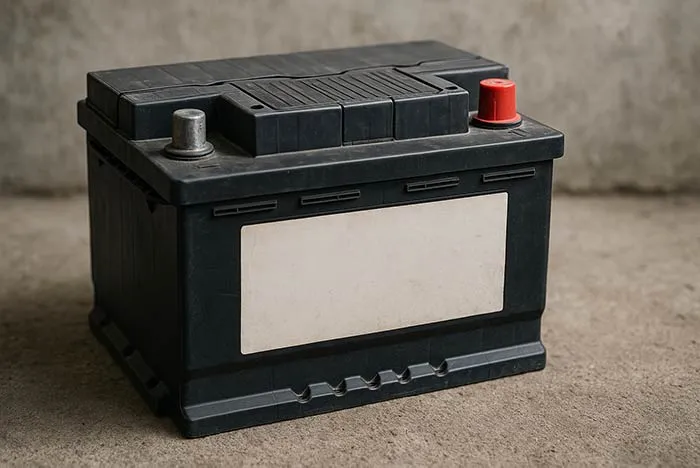
Battery Maintenance and Replacement
A car battery should be checked to ensure it's holding a charge and free from corrosion. A weak or failing battery can leave you stranded.
Frequency: inspect the battery at least twice a year. Most batteries last 3 to 5 years before needing replacement. Our car battery maintenance guide covers the warning signs and how to extend battery life.
Transmission Fluid Replacement
Transmission fluid lubricates the transmission system and helps it shift gears smoothly. Low or dirty transmission fluid can lead to transmission failure.
Frequency: typically every 30,000 to 60,000 miles. Consult the owner's manual for specific intervals.
Spark Plug Replacement
Spark plugs ignite the air-fuel mixture in the engine, so worn-out plugs lead to poor performance and decreased fuel efficiency.
Frequency: replace every 30,000 to 100,000 miles, depending on the type of spark plug and the vehicle model.
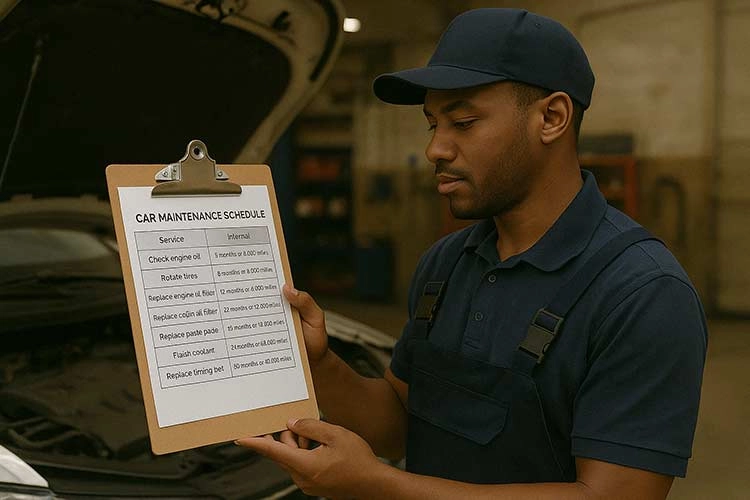
Car Maintenance Schedule
The maintenance schedule provides a detailed, clear guideline for vehicle owners to follow, ensuring consistent and reliable car care.
| Task | Frequency (Miles) | Frequency (Kilometers) |
|---|---|---|
| Oil Change | Every 5,000 - 7,500 miles | Every 8,000 - 12,000 km |
| Tire Rotation | Every 6,000 - 8,000 miles | Every 9,500 - 13,000 km |
| Fluid Checks | Monthly | Monthly |
| Air Filter Replacement | Every Oil Change | Every Oil Change |
| Timing Belt Replacement | Every 60,000 - 100,000 miles | Every 96,000 - 160,000 km |
| Brake Inspection | Every 10,000 - 15,000 miles | Every 16,000 - 24,000 km |
| Battery Check | Twice a year | Twice a year |
| Transmission Fluid Change | Every 30,000 - 60,000 miles | Every 48,000 - 96,000 km |
| Spark Plug Replacement | Every 30,000 - 100,000 miles | Every 48,000 - 160,000 km |
| Cabin Air Filter Replacement | Every 15,000 - 30,000 miles | Every 24,000 - 48,000 km |
| Coolant Flush | Every 30,000 - 50,000 miles | Every 48,000 - 80,000 km |
| Brake Fluid Replacement | Every 20,000 - 45,000 miles | Every 32,000 - 72,000 km |
| Wheel Alignment | Every 10,000 - 15,000 miles | Every 16,000 - 24,000 km |
| Power Steering Fluid Replacement | Every 50,000 miles | Every 80,000 km |
| Fuel Filter Replacement | Every Oil Change | Every Oil Change |
Good to know
These are safe general intervals — your owner's manual always takes priority. Harsh conditions (short trips, towing, extreme heat or cold, dusty roads) push every interval toward the shorter end. For alignment specifics, see the wheel alignment guide.
Full Car Inspection Checklist
A full inspection of your vehicle ensures that all key components are functioning properly. The checklist is designed to help you systematically work from the exterior to the interior and under-the-hood elements. Regular inspections not only improve safety but also help identify issues early, preventing more costly repairs. Following a full car inspection checklist means you're aware of your vehicle's overall condition and can catch potential issues before they escalate.
| Checklist Area | Task | Frequency |
|---|---|---|
| Exterior and Tires | Tire Condition and Pressure | Monthly; rotate every 6,000 - 8,000 miles (9,500 - 13,000 km) |
| Lights (Headlights, Brake Lights, Turn Signals) | Monthly | |
| Windshield Wipers and Washer Fluid | Check wipers every 6 months; refill washer fluid monthly | |
| Body and Glass | Monthly or after significant weather events | |
| Tire Tread Depth | Check every 6 months; replace tires when tread is below 2/32 inches (1.6 mm) | |
| Alignment and Suspension | Every 10,000 - 15,000 miles (16,000 - 24,000 km) or if the vehicle pulls to one side | |
| Under the Hood | Engine Oil Level and Quality | Monthly |
| Coolant Level and Condition | Monthly; flush every 30,000 - 50,000 miles (48,000 - 80,000 km) | |
| Transmission Fluid Level and Quality | Every 30,000 - 60,000 miles (48,000 - 96,000 km) | |
| Brake Fluid Level and Condition | Every 6 months; replace every 20,000 - 45,000 miles (32,000 - 72,000 km) | |
| Battery Health and Terminals | Twice a year; clean terminals if corrosion is present | |
| Belts and Hoses | Inspect every 6 months for wear or cracking; replace as needed | |
| Power Steering Fluid | Check every 6 months; replace every 50,000 miles (80,000 km) | |
| Engine Air Filter | Inspect every 12,000 - 15,000 miles (19,000 - 24,000 km) | |
| Interior Checks | Dashboard Warning Lights | Every start-up; address any warnings immediately |
| HVAC System (Heating, Cooling, Ventilation) | Seasonally; inspect for strange smells or noises | |
| Cabin Air Filter | Replace every 15,000 - 30,000 miles (24,000 - 48,000 km) | |
| Seat Belts and Safety Equipment | Annually; check for fraying and proper functioning | |
| Horn and Mirrors | Monthly; test horn and ensure mirrors are properly adjusted | |
| Pedals (Brake, Clutch, Accelerator) | Monthly; ensure smooth and responsive movement | |
| Brakes and Suspension | Brake Pads and Rotors | Inspect every 10,000 - 15,000 miles (16,000 - 24,000 km); replace pads every 20,000 - 50,000 miles (32,000 - 80,000 km) |
| Shock Absorbers and Struts | Check every 50,000 miles (80,000 km); replace if leaking or if the ride is bumpy | |
| Wheel Bearings | Inspect every 30,000 miles (48,000 km) for noise or play | |
| Exhaust System | Exhaust Pipe and Muffler | Inspect every 12 months; check for rust, leaks, or unusual noises |
| Emissions and Oxygen Sensors | Check every 30,000 - 50,000 miles (48,000 - 80,000 km) or if the "Check Engine" light is on | |
| Fluids and Filters | Fuel Filter | Replace every 20,000 - 40,000 miles (32,000 - 64,000 km) |
| Differential Fluid | Change every 30,000 - 60,000 miles (48,000 - 96,000 km) | |
| Windshield Washer Fluid | Monthly, especially before long trips or during winter | |
| Additional Checks | Door Locks and Window Controls | Monthly; test for smooth operation |
| Exterior and Interior Lights | Monthly; replace any burnt-out bulbs | |
| Emergency Kit | Annually; check for essentials like a spare tire, jack, jumper cables, flashlight, and first aid kit |
By following the checklist regularly, you can be sure you are covering all aspects of your vehicle's safety, performance, and reliability. For a quick monthly routine, tick through the essentials:
Monthly 10-minute maintenance check
0 of 7 checked
Common Car Maintenance Mistakes
Most expensive repairs start as one of these avoidable habits:
Common mistakes to avoid
Stretching oil changes far past the interval because the car 'seems fine'.
Do this instead: Follow the schedule — degraded oil damages the engine quietly, long before symptoms appear.
Ignoring dashboard warning lights for weeks.
Do this instead: Have warning lights read promptly. A $20 diagnostic often prevents a $2,000 repair.
Skipping tire rotations until two tires are bald.
Do this instead: Rotate with every oil change — it costs little and doubles as a brake and suspension check.
Topping up fluids without asking why they were low.
Do this instead: Recurring low levels mean a leak or burning — find the cause instead of masking it.
Only servicing the car when something breaks.
Do this instead: Preventive maintenance is always cheaper than reactive repair — that is the entire point of the schedule.
Losing service records.
Do this instead: Keep every invoice (or a simple log). A documented history increases resale value and buyer trust.
Why Maintenance History Matters When Buying a Used Car
Everything in this guide has a second use: it tells you exactly what to look for when buying a used car. A car that followed this schedule will have the records to prove it — invoices for oil changes, brake jobs, timing belt replacement. A car with no history is a car where you inherit someone else's skipped maintenance.
When evaluating a used car:
- Ask for service records and match them against the schedule above. Gaps around expensive items (timing belt, transmission fluid) are red flags.
- Get a pre-purchase inspection — a mechanic will spot deferred maintenance you can't see on a test drive.
- Check the vehicle history report — it reveals what the seller may not mention: accidents, title problems, and mileage inconsistencies that no service booklet will show.
Before you buy, check the car's history
Service records tell you how the car was maintained — a ProVinCheck report tells you the rest: recorded mileage over time, accident and damage history, and title status. Together they give you the full picture before you pay.
- Mileage check
- Accident & damage
- Title & ownership