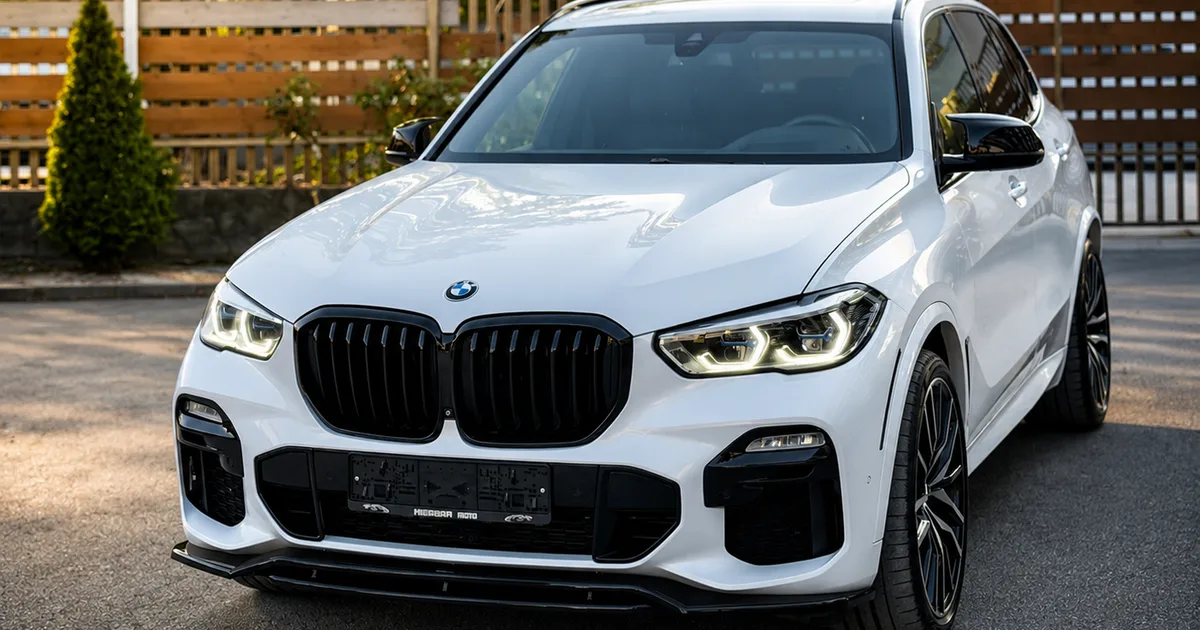
BMW X5 F15 Buyer's Guide: Engines, Reliability & What to Check
A condensed buyer's guide to the BMW X5 F15 (2013–2018), now a mature used car: the engine to trust, the N63 oil-consumption lawsuit, and what to check before buying.

The BMW X5 F15 (2013–2018) is no longer a "new" X5 — it's a mature used car, usually 8–13 years old and out of factory warranty. That makes it easier to judge than a newer generation: most of the fleet has already reached high mileage, so we know what actually breaks. This is a condensed version of our full research.
What is the BMW X5 F15
The F15 is the generation before the current G05, built 2013 through mid-2018. It shares its main engine families with its predecessor, the E70 (N57 diesel, N63 V8), but adds the newer N55 petrol inline-six and, from 2015, the N20-based xDrive40e plug-in hybrid. It's a clear step up from the E70 in build quality and comfort, though the underlying engine risk profile for shared engines isn't dramatically different between the two generations.
Engines at a glance
| Engine | Code | Output | Notes |
|---|---|---|---|
| sDrive25d / xDrive25d | N47 (pre-08/2015) / B47 (post-08/2015) | 218–231 hp | Prefer post-August-2015 cars (B47) |
| xDrive30d / 40d | N57 (I6 diesel) | 258–313 hp | Solid on distance, sensitive to short trips |
| M50d | N57S (tri-turbo diesel) | 381 hp | Turbo actuator failure is a known, expensive risk |
| sDrive35i / xDrive35i | N55 (I6 petrol) | 306 hp | The most reliable engine in the range |
| xDrive50i | N63TU (V8tt) | 450 hp | Covered by the N63TU oil-consumption lawsuit |
| X5 M (F85) | S63Tu (V8tt) | 575 hp | Shares N63TU's hot-V heat-related weak points |
| xDrive40e | N20 + electric motor | 313 hp combined | Highest-risk version — see below |
N55 vs N57: which engine
If you drive 20,000+ km a year, mostly motorway, the N57 diesel wins on running cost. If you're mostly city driving or under 15,000 km/year, the N55 petrol is the safer pick — no DPF/EGR/AdBlue system to be sensitive to short trips. For the lowest overall risk on a car this age, N55 has a slight edge in owner-reported long-term reliability.
The V8s and a real lawsuit
A real, documented class-action settlement — and it's about this exact car
BMW's N63TU V8 (used in the F15 xDrive50i, and the closely related S63Tu in the X5 M) is covered by Isley v. BMW of North America, a US class-action settlement over excessive oil consumption in N63TU1 engines, model years 2013–2019. The named plaintiff's own vehicle was a 2015 BMW X5 xDrive50i — an F15, whose engine had already been replaced once by BMW and continued burning oil (6–8 quarts between changes). If you're buying an xDrive50i or X5 M, ask directly whether the car was enrolled in this settlement and what the oil-consumption test result was. Valve stem seal wear is a related, well-documented issue costing roughly $4,000–9,000 to fix depending on shop.
The xDrive40e PHEV: a risk worth knowing
BMW's first X5 plug-in hybrid used a small ~9 kWh battery and delivered a real-world electric range of only 8–14 miles — often at or below the official rating, unlike later PHEVs. A specialist EV repair shop documented a real case of a full HV battery failure at 150,000 km, with a dealer quote of roughly €11,000 for a full replacement versus ~€4,500 for an independent modular repair. Most surviving units are now out of the (typically 8-year/80,000-mile) battery warranty. Unless you have reliable home charging and can verify the battery's health directly, this is the version to be most cautious about.
Most common problems
| Problem | How common | Severity |
|---|---|---|
| N63/S63 V8 oil consumption (class action) | Documented, litigated | High |
| Valve stem seal wear (N63/S63) | Confirmed, well documented | High |
| M50d turbo actuator failure | Moderately common | High |
| N57 swirl flaps / EGR cooler | Common at higher mileage | Medium |
| N55 HPFP / water pump | Common | Medium |
| xDrive40e HV battery degradation | Documented, potentially severe | Very High |
| Air suspension wear (rear axle) | Common — most units are now past typical component lifespan | Medium-High |
| Panoramic sunroof drain clogging | Common | Low (usually just a clean-out) |
Best model years
There's no strong consensus on a single "best" or "worst" year for the petrol/diesel six-cylinder models — service history matters more than the specific year. The one clear, well-supported cutoff: for the four-cylinder diesel (25d), prefer cars built after August 2015, when BMW replaced the older N47 with the newer B47. Note also that the F15 never received a true facelift — G05 replaced it directly in 2018; the 2017 model year update was a touchscreen/CarPlay infotainment change only.
Pre-purchase checklist
Check the car's real history before the test drive
A ProVinCheck report reveals accident history, real mileage, and title type for a BMW X5 F15 by VIN — in minutes, before you spend time on an in-person inspection.
- Mileage check
- Accident & damage
- Title & ownership
BMW X5 F15 pre-purchase checklist
0 of 14 checked
Which version should you buy
- 🥇 Best all-round: xDrive35i (N55) — the best balance of reliability, character, and running cost.
- 🥈 Best diesel: xDrive30d (N57) — proven on long distances with clean service history.
- 💰 Best value: a well-equipped 2017–2018 car with the touchscreen/CarPlay update.
- 🛡️ Lowest long-term risk: xDrive35i with clean, complete service history.
- ⚠️ Approach with caution: xDrive40e, unless you can verify battery health directly.
Final verdict
7/10. The F15's real appeal today is value, not technology — a well-equipped example often costs about the same as a bare, high-mileage early G05, while offering more standard luxury equipment. The risk is real but well-documented: V8 oil consumption, aging air suspension, and the xDrive40e's battery. Buy with a clean service history and a proper inspection, and the F15 remains a sensible used purchase.
BMW X5 F15 — frequently asked questions
Sources
This is a condensed summary of a much more detailed research pass — official BMW data, NHTSA recall records, court filings (ClassAction.org, CarComplaints.com), specialist repair-shop case studies, and long-term owner reports from Bimmerpost. For the full breakdown by engine, model year, and system, combine this with an independent pre-purchase inspection and a VIN history check before buying.
For more on decoding a BMW X5's VIN specifically — where to find it and what it reveals about the generation and spec — see our BMW X Series VIN check page, which covers the F15 too.